You walk into your home after a long, hot day, switch on the air conditioner, and before long, a damp, unpleasant odor begins coming through the vents.
At first, it may not seem like a big concern. You might assume the house has been closed up all day or blame the humid weather outside. However, if that musty smell returns every time your AC starts running, it’s often a sign that something inside the system requires attention.
The good news is that a musty smell from an AC unit is usually linked to a common issue that can be resolved. In many cases, excess moisture has collected somewhere within the system, creating the perfect environment for mold or mildew growth. If ignored, that moisture can impact indoor air quality, reduce comfort inside your home, and potentially lead to costly AC repairs in San Antonio.
Why Does My AC Smell Musty?
Air conditioners do more than just keep your home cool. They also help control indoor humidity by removing excess moisture from the air. As your system operates, condensation naturally forms on the evaporator coil and should flow out through the drain system.
When that drainage process is disrupted, moisture can build up inside the unit. This creates the ideal conditions for mold, mildew, and bacteria to thrive.
A musty odor coming from your air conditioner is often caused by one of the following issues:
- Mold or mildew growing on the evaporator coil
- A blocked condensate drain line
- Standing water inside the AC unit
- A clogged or dirty air filter
- Mold buildup within the ductwork
- High levels of indoor humidity
- Dust and moisture accumulation after long periods of inactivity
The key is identifying the specific source of the odor before it becomes a bigger problem.
Mold on the Evaporator Coil
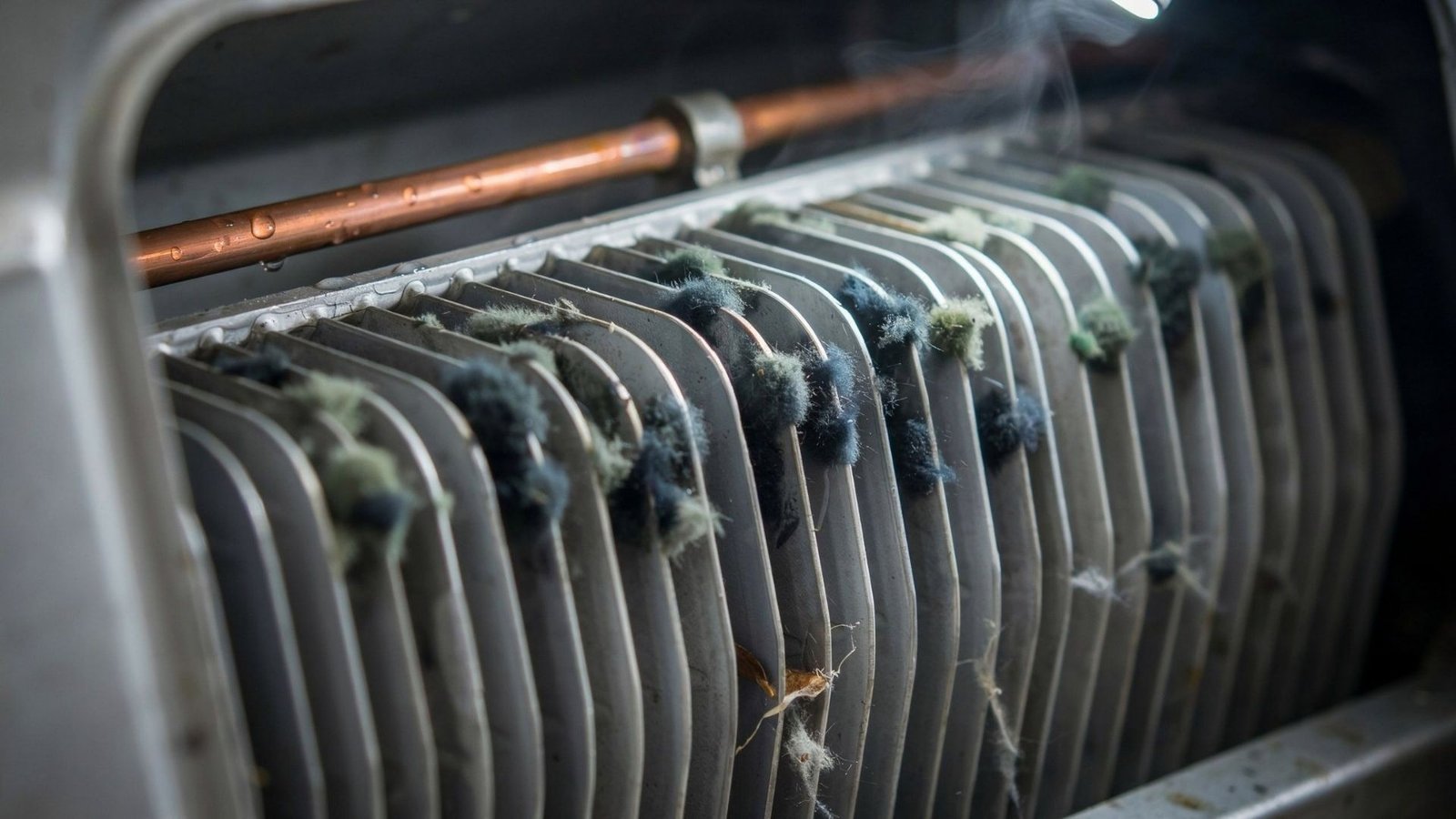
If HVAC technicians had to name the most common cause of a musty AC smell, mold growing on the evaporator coil would be near the top of the list.
The evaporator coil naturally stays damp while your air conditioner is running. Over time, dust and airborne particles stick to the coil’s surface. Add moisture to the mix, and you’ve created an ideal place for mold and mildew to grow.
The smell is often most noticeable when the AC first turns on. That’s because air immediately passes over the contaminated coil and carries the odor into your living space.
Many homeowners describe the smell of mold as similar to a damp basement, wet towels, or old laundry that has been sitting too long.
A Clogged Drain Line Could Be Trapping Moisture
Your AC system removes a surprising amount of water from the air every day. That water travels through a condensate drain line and exits the home.
Over time, algae, dirt, and debris can clog the line. When that happens, water backs up instead of draining properly.
The result is exactly what mold and mildew need to thrive.
You may notice other warning signs besides the smell, including:
- Water around the indoor unit
- Higher humidity indoors
- A full drain pan
- Occasional system shutdowns
Because drain line clogs are so common, they’re often one of the first things HVAC professionals check when investigating musty odors.
Don’t Overlook the Air Filter
Sometimes homeowners expect a complicated answer when the real problem is a filter that should have been replaced months ago.
A dirty air filter restricts airflow throughout the system. When airflow decreases, moisture can remain on internal components longer than it should. That extra moisture increases the chances of mold growth.
Beyond the odor itself, a clogged filter may also cause:
- Weak airflow from vents
- Increased dust inside the home
- Higher energy bills
- Uneven cooling
Fortunately, this is one of the easiest and least expensive issues to fix.
Mold Might Be Hiding in the Ductwork
If you’ve replaced the filter and the smell still won’t go away, the source may not be the air conditioner itself.
Ductwork can develop mold when moisture finds its way inside. This is especially common in humid climates or homes with poorly insulated ducts.
One clue is that the smell may be stronger in certain rooms than others. Instead of noticing the odor throughout the entire house, you may only detect it from specific vents.
Because ductwork is hidden behind walls, ceilings, and floors, this issue can be difficult for homeowners to diagnose on their own.
High Humidity Can Make the Problem Worse
Even a properly functioning air conditioner can struggle when indoor humidity levels are too high.
Many homeowners notice that their AC smells mustier after several days of rain or during particularly humid weather. That’s not a coincidence.
The more moisture there is in the air, the harder your cooling system has to work to remove it. If mold already exists somewhere inside the system, the added humidity often makes the odor much more noticeable.
Ideally, indoor humidity should stay between 30% and 50%. Anything above that can encourage mold and mildew growth throughout the home.
The Strange HVAC Problem Called Dirty Sock Syndrome
Yes, it’s a real thing.
Dirty Sock Syndrome is the nickname HVAC professionals use when microbial growth develops on the evaporator coil and creates an odor that smells remarkably similar to dirty gym socks.
The smell can be especially noticeable during mild weather when the system cycles on and off frequently.
While the name sounds funny, the issue itself can be frustrating. Fortunately, professional coil cleaning often solves the problem.
Why Does My AC Smell Musty After Winter?
Many homeowners notice a musty odor the first time they turn on the AC each spring.
During the winter months, dust settles inside the system while small amounts of moisture may remain trapped in certain components. When the cooling season arrives, that buildup can create temporary odors.
Sometimes the smell disappears after a day or two of operation. Other times, it reveals mold growth that developed while the system was sitting unused.
If the odor continues beyond the first few cooling cycles, it’s worth investigating further.
How to Figure Out Where the Smell Is Coming From
Before spending money on repairs, it helps to narrow down the source of the problem.
Use this simple guide:
| What You Notice | Likely Cause |
| Smell only when the AC starts | Mold on the evaporator coil |
| Smell all the time | Mold in ductwork |
| Smell after rainy weather | High humidity |
| Smell is strongest near the indoor unit | Drain line or drain pan issue |
| Smell from one room only | Duct problem |
| Smell after winter startup | Seasonal buildup |
This isn’t a perfect diagnostic tool, but it can point you in the right direction.
Can a Musty AC Smell Make You Sick?

A musty smell doesn’t automatically mean your health is in danger. However, it shouldn’t be ignored either.
The odor often indicates the presence of mold, mildew, or bacteria somewhere within the HVAC system. For people with allergies, asthma, or respiratory conditions, these contaminants can sometimes trigger symptoms.
Common complaints include:
- Sneezing
- Nasal congestion
- Coughing
- Watery eyes
- Headaches
- Increased allergy symptoms
If family members consistently feel worse when the AC is running, the system should be inspected as soon as possible.
How to Get Rid of a Musty Smell From an AC Unit
The right solution depends on what’s causing the odor.
Start with the basics. Replace the air filter if it’s dirty. Even if it isn’t the root cause, installing a clean filter improves airflow and removes one potential contributor.
Next, inspect visible vents and registers. Dust and debris around vents can trap odors and reduce airflow.
If you’re comfortable doing so, check the condensate drain line for signs of blockage. A clogged drain line is one of the most common causes of moisture buildup.
You should also focus on reducing humidity inside the home. Running bathroom exhaust fans, using a dehumidifier, and addressing moisture issues can make a noticeable difference.
When performing any maintenance:
- Turn off the power to the system first
- Wear gloves if mold is visible
- Avoid spraying harsh chemicals inside HVAC components
- Contact a professional for extensive mold growth
In many cases, these simple steps help reduce or eliminate the odor.
When It’s Time to Call an HVAC Professional
Sometimes, no matter how many filters you replace or vents you clean, the musty smell just won’t go away. If you’ve already tackled the basic maintenance tasks and the odor keeps returning, it’s usually a sign that the problem runs deeper within the system.
An experienced HVAC technician can inspect areas that aren’t easily accessible to homeowners, such as the evaporator coil, blower assembly, condensate drain system, and internal ductwork. These hidden components are often where mold, mildew, and moisture-related issues begin.
Depending on what’s causing the odor, a professional may recommend:
- Professional coil cleaning
- Drain line cleaning
- Blower wheel cleaning
- Duct inspection
- UV light installation to help control microbial growth
If you’re dealing with a persistent musty smell, the team at IAQ Cleaning can perform a thorough system inspection to identify the source of the problem and recommend the right solution. Addressing the issue early can help improve indoor air quality, prevent further HVAC damage, and restore fresh, clean airflow throughout your home.
A professional diagnosis often saves time, prevents unnecessary repairs, and gives you peace of mind knowing the problem has been properly addressed.
Preventing Musty AC Smells in the Future
The easiest way to deal with a musty AC smell is to prevent it from happening in the first place.
Routine maintenance keeps moisture under control and helps catch small problems before they become major ones.
A few habits go a long way:
- Change air filters regularly
- Keep indoor humidity between 30% and 50%
- Schedule annual AC maintenance
- Address water leaks promptly
- Keep vents clean and unobstructed
These simple steps can improve indoor air quality, reduce strain on your system, and help your home stay comfortable year-round.
Final Thoughts
A musty smell from an AC unit is usually your system’s way of telling you that moisture is building up somewhere it shouldn’t.
Sometimes the fix is as simple as replacing an air filter. Other times, the smell points to mold growth, a clogged drain line, or excessive humidity inside the home.
The important thing is not to ignore it. The longer moisture problems are allowed to continue, the more likely they are to affect your comfort, indoor air quality, and HVAC system performance.
If basic AC maintenance doesn’t solve the problem, having the system inspected by a qualified HVAC professional can help identify the source before it turns into a larger and more expensive issue.
Frequently Asked Questions
1. Why does my AC smell musty when it first turns on?
Moisture on the evaporator coil can lead to mold or mildew growth, causing a musty odor when the system starts.
2. What causes a musty smell from an air conditioner?
Common causes include mold growth, clogged drain lines, standing water, dirty filters, and high indoor humidity.
3. How do I get rid of a musty smell from my AC unit?
Replace the filter, clean vents, inspect the drain line, and address humidity issues. Persistent odors may require professional service.
4. Is a musty AC smell dangerous?
It can indicate mold or bacteria growth that may affect indoor air quality and trigger allergy or respiratory symptoms.
5. Why does my AC smell musty after rain?
High humidity after rain can increase moisture inside the HVAC system, making existing mold or mildew odors more noticeable.
6. Can mold in an AC unit make you sick?
Yes. Mold spores can contribute to coughing, sneezing, headaches, and allergy flare-ups in sensitive individuals.
7. Why does my house smell musty only when the AC is running?
The odor often comes from HVAC components such as the evaporator coil, drain pan, blower assembly, or ductwork.