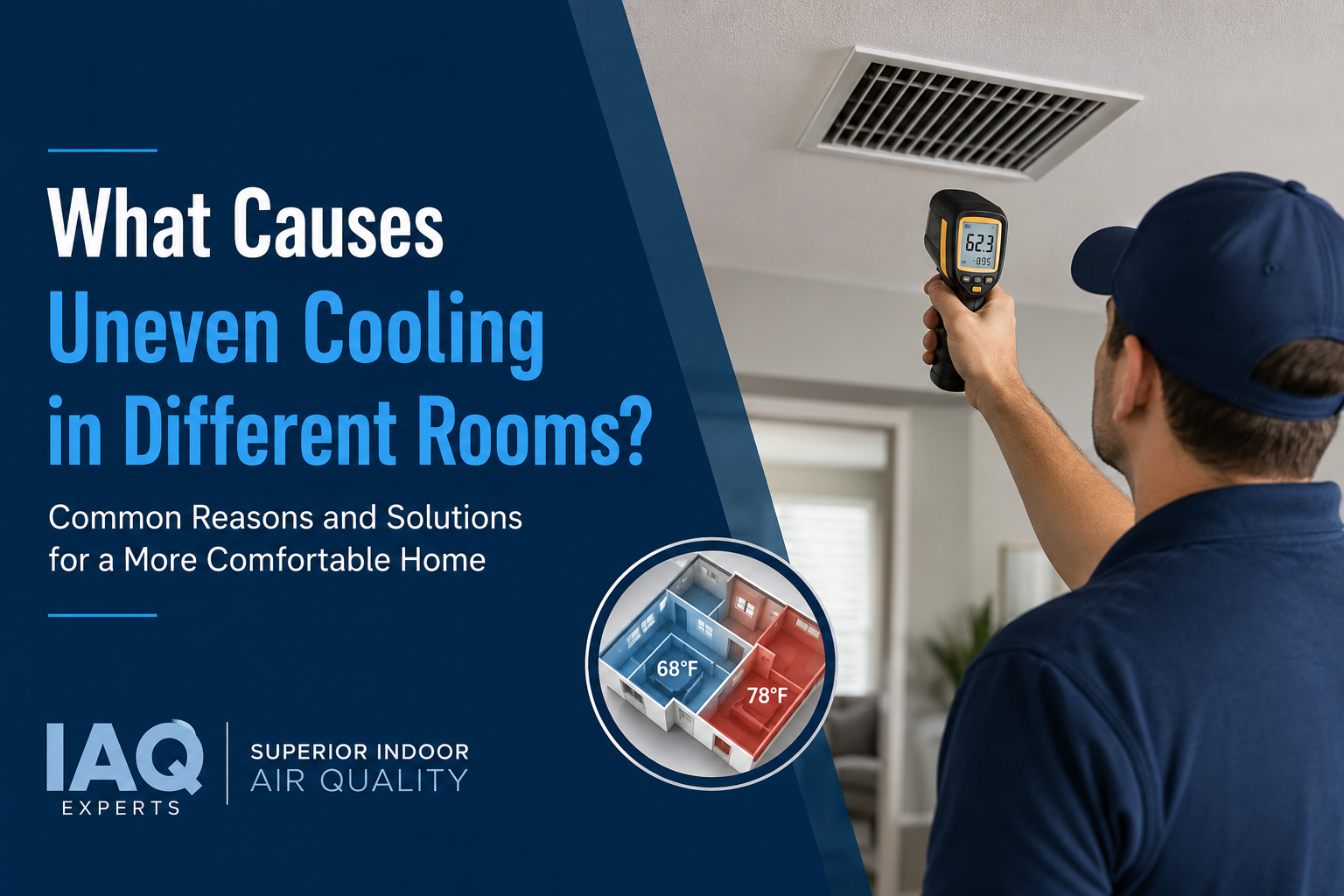
Have you ever noticed that one room in your home feels perfectly comfortable while another remains warm and stuffy, even when your air conditioner is running? Uneven cooling is one of the most common HVAC complaints among homeowners. Not only can it make certain areas of your home uncomfortable, but it can also increase energy costs and place unnecessary strain on your cooling system.
Understanding the causes of uneven cooling can help you identify potential issues and determine the best solution for maintaining consistent comfort throughout your home. In this guide, we’ll explore the most common reasons why some rooms stay cooler than others and what you can do to fix the problem.
Understanding Uneven Cooling
Uneven cooling occurs when your air conditioning system is unable to distribute conditioned air evenly throughout your home. As a result, some rooms may feel significantly cooler while others remain warmer than desired. This issue can develop gradually over time or become noticeable after home renovations, HVAC upgrades, or seasonal changes.
The root cause is often linked to airflow problems, insulation deficiencies, ductwork issues, or system design limitations. Identifying the underlying problem is essential for achieving balanced indoor temperatures.
Blocked or Closed Air Vents
One of the simplest and most overlooked causes of uneven cooling is blocked or closed air vents. Furniture, curtains, rugs, or decorative items can obstruct airflow, preventing cool air from reaching certain rooms effectively. In some cases, homeowners may intentionally close vents in unused rooms believing it will save energy. However, doing so can disrupt the system’s airflow balance and create pressure issues that affect cooling performance throughout the home.
Ensuring that all supply and return vents are fully open and free from obstructions can often improve temperature consistency significantly.
Leaky or Damaged Ductwork
Your ductwork acts as the delivery system for conditioned air. If ducts develop leaks, gaps, or disconnected sections, a significant amount of cooled air may escape before reaching its intended destination. This can leave some rooms undercooled while others receive adequate airflow.
Duct leaks are especially common in attics, crawl spaces, and older homes where duct systems have aged over time. Professional duct inspections can identify hidden leaks and help restore proper airflow distribution.
Poor Insulation
Insulation plays a critical role in maintaining indoor comfort. Rooms with inadequate insulation may gain heat more quickly than other areas of the home, making them harder to cool. This is particularly common in upstairs bedrooms, bonus rooms, garages converted into living spaces, and rooms with large exterior walls.
When insulation levels vary throughout the home, your HVAC system must work harder to compensate for heat transfer, often resulting in noticeable temperature differences between rooms.
Sun Exposure and Window Placement
Not all rooms receive the same amount of sunlight throughout the day. South-facing and west-facing rooms often experience greater solar heat gain, especially during the summer months. Large windows without energy-efficient treatments can allow significant heat to enter the home, causing these rooms to feel warmer despite active air conditioning.
Installing energy-efficient windows, solar shades, blackout curtains, or window films can help reduce heat gain and improve temperature balance.
Improper HVAC System Sizing
An air conditioning system that is too large or too small for your home can contribute to uneven cooling. An oversized system may cool the home too quickly and shut off before air has been distributed evenly throughout every room. On the other hand, an undersized system may struggle to meet cooling demands during peak temperatures.
Proper HVAC sizing requires detailed calculations that account for square footage, insulation levels, window placement, ceiling height, and local climate conditions. If your system was improperly sized during installation, temperature inconsistencies may persist regardless of maintenance efforts.
Dirty Air Filters
A clogged air filter restricts airflow and reduces your HVAC system’s efficiency. When airflow becomes limited, certain rooms may receive less conditioned air than others, leading to uneven temperatures.
Regularly replacing or cleaning air filters according to manufacturer recommendations helps maintain proper airflow and supports consistent cooling performance throughout the home.
Multi-Story Home Challenges
Uneven cooling is especially common in two-story homes. Because warm air naturally rises, upper floors often remain warmer than lower levels. During summer months, upstairs rooms may feel significantly hotter, even when the air conditioner is operating normally.
Solutions such as zoning systems, variable-speed HVAC equipment, improved attic insulation, and ceiling fans can help address temperature differences between floors.
Inadequate Return Airflow
Most homeowners focus on supply vents, but return vents are equally important. Return vents pull air back into the HVAC system for recooling and redistribution. If return airflow is restricted or insufficient, some rooms may experience pressure imbalances that affect overall comfort.
A professional HVAC technician can evaluate your home’s return air design and determine whether additional return vents or airflow adjustments are needed.
Aging HVAC Equipment
As air conditioning systems age, their performance naturally declines. Components such as blower motors, evaporator coils, and compressors may become less efficient, reducing the system’s ability to distribute cool air evenly.
If your HVAC system is more than 10 to 15 years old and frequently struggles to maintain consistent temperatures, it may be time to consider repairs or a system replacement.
How HVAC Professionals Diagnose Uneven Cooling
Diagnosing uneven cooling requires a comprehensive evaluation of your home’s HVAC system and building envelope. Technicians typically inspect airflow levels, ductwork condition, thermostat placement, insulation quality, system sizing, and equipment performance. Advanced diagnostic tools can identify hidden airflow restrictions, temperature imbalances, and energy losses that may not be immediately visible.
A professional assessment often provides the fastest path to identifying the root cause and implementing an effective solution.
Preventing Uneven Cooling Problems
Preventative maintenance is one of the best ways to avoid uneven cooling issues. Regular HVAC tune-ups, duct inspections, air filter replacements, and insulation evaluations can help maintain optimal system performance. Homeowners should also monitor airflow from vents, keep registers unobstructed, and address any unusual temperature fluctuations before they become more serious problems.
By staying proactive, you can improve comfort, lower energy costs, and extend the lifespan of your cooling equipment.
Conclusion
Uneven cooling can result from a variety of factors, including blocked vents, leaky ductwork, poor insulation, sun exposure, improper system sizing, and aging HVAC equipment. While some issues can be addressed with simple maintenance, others may require professional evaluation and repairs.
If certain rooms in your home consistently feel warmer than others, a comprehensive HVAC inspection can help identify the underlying cause and restore balanced comfort throughout your living space. Addressing uneven cooling not only improves indoor comfort but also helps your air conditioning system operate more efficiently and effectively for years to come.