Mildew and mold are two of the most common household problems, yet many people still confuse them. At first glance, they can look similar, but the difference between mildew vs mold goes far beyond appearance. Misidentifying them often leads to ineffective cleaning and, in some cases, worsens the issue.
Understanding how they differ, which one is more dangerous, and how to deal with each properly can save you time, money, and potential health risks. This guide breaks it all down in a simple, practical way so you can take the right action immediately.
Mildew vs Mold
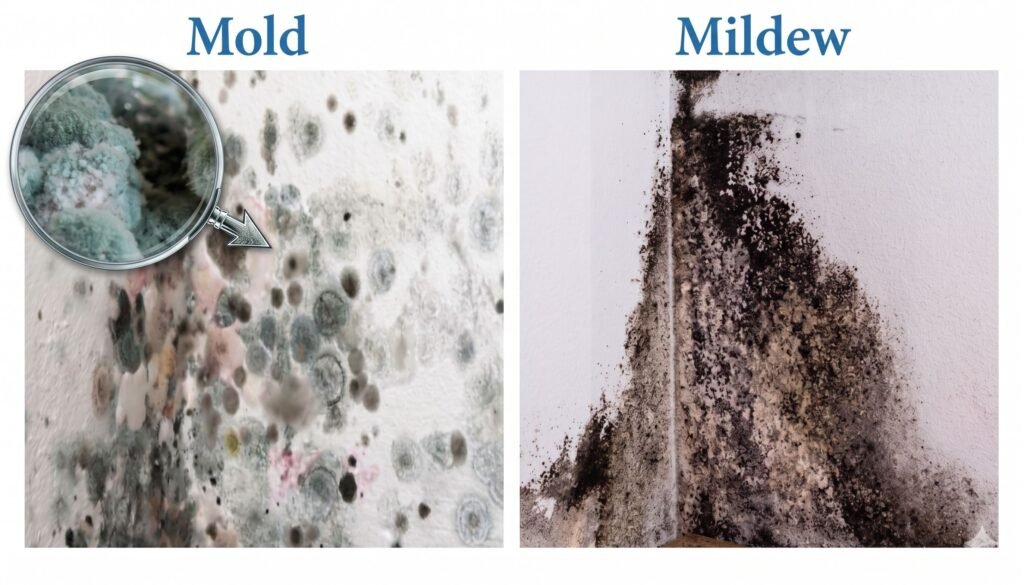
Mildew is a surface-level fungus that usually appears white or gray and is relatively easy to clean. Mold is darker, more invasive, and can grow deep into materials, making it harder to remove. In most situations, mold is more dangerous due to its potential impact on both health and property.
What Is Mildew?
Mildew is an early-stage fungus that thrives in damp, humid environments. It tends to grow on flat surfaces and is often the first visible sign that moisture is building up in a particular area.
You’ll usually notice mildew as a thin, powdery layer that spreads across surfaces like bathroom tiles, window frames, or even fabric. Because it stays on the surface, it’s much easier to remove compared to mold. In most cases, basic household cleaning solutions are enough to eliminate it.
Despite being less severe, mildew shouldn’t be ignored. If left untreated, it creates the perfect conditions for more aggressive fungal growth, including mold.
What Is Mold?
Mold is a more advanced and potentially harmful type of fungus. Unlike mildew, it doesn’t just sit on the surface—it penetrates deeper into materials such as drywall, wood, and insulation.
It typically appears in darker shades like black, green, or brown and has a fuzzy or slimy texture. Mold often grows in areas with ongoing moisture problems, such as basements, leaking ceilings, or poorly ventilated rooms.
What makes mold more concerning is its ability to spread quickly and damage structures over time. It can weaken walls, permanently stain surfaces, and create persistent odors that are difficult to eliminate. If you want to explore the different types of mold in detail, check out our complete guide and discover what you need to know.
Mold vs Mildew: How They Impact Your Indoor Air Quality
Both mildew and mold can impact indoor air quality, but mold poses a greater risk. Mildew may cause mild irritation and a slight musty smell, while mold releases airborne spores that can reduce air quality and trigger allergies or breathing issues. If left untreated, mold can significantly affect the air you breathe indoors, especially in poorly ventilated spaces.
Mildew vs Mold: What is the difference between mold and mildew?
Understanding the differences clearly can help you take the right action quickly.
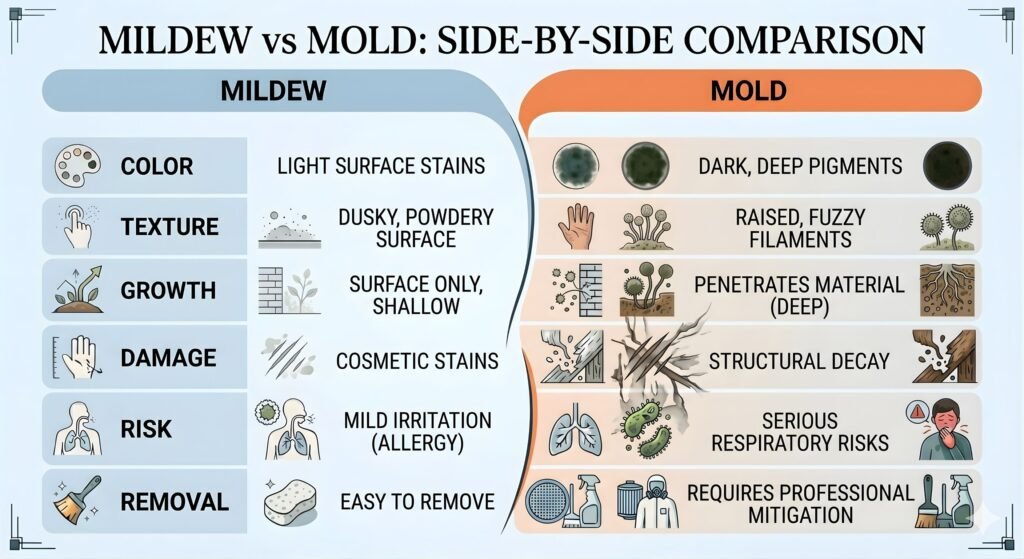
| Feature | Mildew | Mold |
| Color | White, gray, yellow | Black, green, dark brown |
| Texture | Powdery, flat | Fuzzy, slimy, raised |
| Growth Pattern | Surface-level | Deep and spreading |
| Damage Potential | Minimal | Structural damage possible |
| Health Risk | Mild irritation | Can cause serious issues |
| Removal Difficulty | Easy | Moderate to difficult |
Mildew vs Mold: Which One Is More Dangerous?
Mold is significantly more dangerous than mildew. It can trigger allergies and respiratory problems, some types produce toxic substances, it spreads quickly if not treated, and it damages walls, ceilings, and insulation. Mildew, while unpleasant, usually causes minor irritation and is easier to control.
How to Remove Mildew
Removing mildew is usually a simple process that doesn’t require specialized tools or products. Since it stays on the surface, it can be cleaned with common household solutions.
A mixture of water and white vinegar works effectively for most cases. Spray it directly onto the affected area, let it sit for a few minutes, and then wipe it away with a cloth or sponge. Mild scrubbing may be needed for stubborn spots, but the process is generally quick and straightforward.
The most important step is drying the area completely afterward. Moisture is what allows mildew to grow in the first place, so leaving surfaces damp will only bring the problem back.
Pro tip:
Always dry the area completely to prevent regrowth. Moisture left behind is the #1 reason mildew returns within days.
How to Remove Mold Safely
Mold removal requires more care, especially if the affected area is larger or deeply embedded. For small patches, it’s possible to clean them yourself using proper precautions. Wearing gloves and a mask is important to avoid direct exposure to spores.
Cleaning solutions designed specifically for mold are usually more effective than general cleaners. In some cases, a diluted bleach solution can be used, but it’s not always enough to reach mold beneath the surface.
If mold has spread into porous materials like drywall or wood, those materials may need to be replaced. Simply cleaning the surface won’t solve the problem if the roots remain underneath.
For larger infestations or recurring mold issues, professional help is often the safest option. Experts can identify hidden growth and ensure complete removal.
Important:
If mold has penetrated porous materials like drywall, replacement may be necessary. Bleach can kill surface mold but may not penetrate deep enough to eliminate it.
Common Mistakes to Avoid
One of the biggest mistakes people make is treating mold the same way as mildew. Wiping it away might improve how it looks temporarily, but it doesn’t address the deeper problem. This often leads to the mold returning, sometimes worse than before.
- Treating mold like mildew (just wiping it away)
- Ignoring the source of moisture
- Using too much water during cleaning
- Not drying the area properly
- Delaying action after spotting growth
How to prevent mold and mildew
Prevention is far easier than removal. Controlling moisture is the key to keeping both mildew and mold away.
| Effective prevention tips | Smart daily habits |
| Keep humidity levels below 50% | Open windows when possible |
| Use exhaust fans in bathrooms and kitchens | Use a dehumidifier in damp areas |
| Fix leaks immediately | Avoid leaving wet clothes sitting for long periods |
| Improve ventilation in closed spaces | Run exhaust fans during and after showers |
| Clean and dry wet areas promptly | Inspect plumbing monthly for slow leaks |
When to Call a Professional
While small areas of mildew or mold can often be handled on your own, there are situations where professional help is necessary. If the affected area is large, keeps coming back, or has spread into walls or ceilings, it’s best not to take risks.
A strong, persistent odor can also indicate hidden mold, which may not be visible but still needs to be addressed. In these cases, professionals have the tools and expertise to locate and remove it safely.
FAQs-
What is mildew vs mold?
Mildew is a surface-level fungus that appears white or gray and is easy to clean, while mold is a deeper, more aggressive fungus that can grow in black or green patches and damage surfaces. Mold is generally more harmful and harder to remove than mildew.
What is worse, mildew or mold?
Mold is worse than mildew because it can penetrate deeper into materials, cause structural damage, and trigger health issues such as allergies and respiratory problems. Mildew is usually a mild, surface-level problem.
What kills mildew instantly?
White vinegar is one of the most effective solutions for quickly killing mildew. Spray it directly onto the affected area, let it sit for a few minutes, and wipe it clean. Hydrogen peroxide and baking soda solutions can also work effectively.
Is mildew toxic to humans?
Mildew is generally not toxic, but it can cause mild irritation such as coughing, sneezing, or skin irritation, especially in sensitive individuals. It’s less harmful than mold but should still be removed promptly.
How can I tell if it’s mold or mildew?
You can tell by looking at the color and texture. Mildew is usually white or gray and flat, while mold is darker (black or green) and appears fuzzy or slimy. Mold also tends to spread faster and has a stronger odor.
How to identify mold vs mildew?
Mildew appears as a light-colored, powdery layer on surfaces, while mold looks darker, thicker, and more irregular. If the growth penetrates the surface or keeps returning, it is likely mold.
How to identify black mold vs mildew?
Black mold appears as dark black or green patches with a fuzzy texture, while mildew stays light in color and flat. Black mold also produces a strong musty smell and spreads more aggressively.
How to tell mold vs mildew?
Mildew stays on the surface and is easy to wipe away, while mold grows deeper and often returns after cleaning. If the area shows staining or damage, it’s more likely to be mold.
What does mold vs mildew look like?
Mildew looks like a thin, powdery coating in white or gray shades. Mold appears as dark, blotchy patches that may look fuzzy or slimy and spread unevenly across surfaces.
How do you safely remove mildew?
To safely remove mildew, spray a mixture of white vinegar and water onto the affected area, let it sit for 10–15 minutes, then wipe and dry completely. Always ensure proper ventilation to prevent regrowth.
Final Thoughts
The affected area is larger than 10 square feet — mold keeps coming back — there’s a strong, persistent odor — you suspect hidden mold behind walls — or household members are experiencing health symptoms. Professionals have the tools and expertise to identify hidden growth and eliminate it.
If you’re dealing with persistent mold issues or hidden growth, it’s best to get professional help. Homeowners in San Antonio can rely on IAQ Expert for thorough inspection and safe mold removal solutions.