Indoor humidity plays an important role in maintaining a comfortable and healthy home environment. Many homeowners focus on temperature, but moisture levels in the air are just as important. When humidity is balanced, it helps protect your health, improves indoor comfort, and prevents damage to your home. Understanding the ideal humidity for the home can help you create better indoor air conditions and avoid common issues like mould, allergies, and dry air.
Maintaining proper humidity levels can also improve indoor air quality and support the performance of your HVAC system. Whether it is summer or winter, knowing what a good indoor humidity level is and how to maintain it can make a significant difference in the overall comfort of your living space.
What Is a Good Indoor Humidity Level?
| Outside Temperature | Recommended RH |
|---|---|
| +40°F | 45% |
| +30°F | 40% |
| +20°F | 35% |
| +10°F | 30% |
| 0°F | 25% |
| -10°F | 20% |
| -20°F | 15% |
A good indoor humidity level generally falls between 30% and 50%. This range provides the best balance for comfort, health, and home protection. When humidity stays within this range, it reduces the risk of mould growth, dust mites, and other indoor air quality problems.
Humidity levels lower than 30% can make indoor air feel dry and uncomfortable. Dry air may cause irritated skin, a dry throat, and respiratory discomfort. On the other hand, humidity levels higher than 50% can make the air feel heavy and increase the chances of mould and mildew developing inside the home.
Maintaining a good indoor humidity level helps keep indoor air comfortable while protecting furniture, flooring, and walls from moisture-related damage.
What Should Be the Humidity Inside a House?
Many homeowners ask what the humidity should be inside a house throughout the year. The ideal humidity can vary slightly depending on the season and outdoor weather conditions.
During colder months, indoor heating systems often reduce humidity levels. In winter, maintaining humidity between 30% and 40% helps prevent dry air and improves comfort.
In warmer months, humidity levels tend to rise because outdoor air carries more moisture. During summer, keeping humidity between 40% and 50% helps prevent indoor air from feeling sticky or uncomfortable.
Understanding what should be the humidity inside a house allows homeowners to adjust their indoor environment based on seasonal changes while maintaining a healthy and comfortable living space.
What Is Considered High Humidity in a Home?
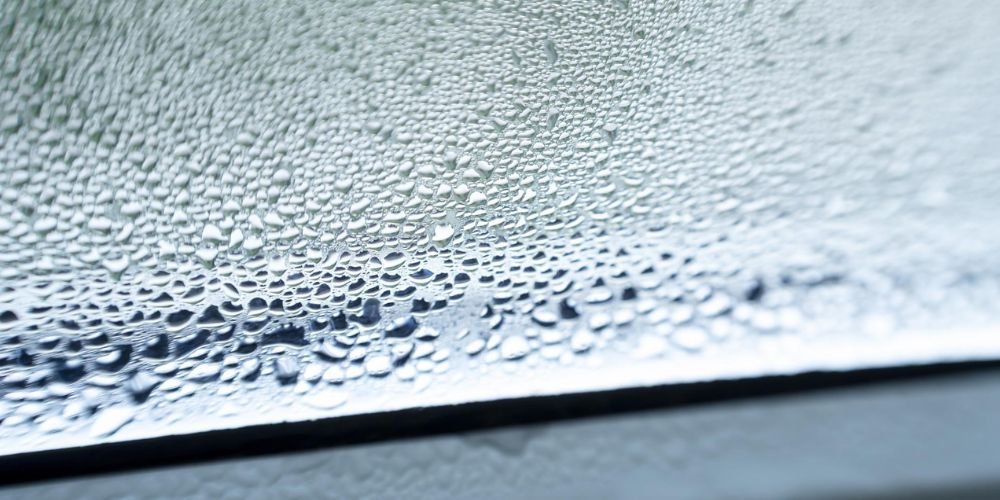
Another common question is what is considered high humidity inside a home. In most cases, indoor humidity levels above 60% are considered high and may cause several problems.
High humidity can create the perfect conditions for mould and mildew growth. It can also cause musty odors, condensation on windows, and damp walls. Over time, excessive moisture can damage wood furniture, flooring, and even structural components of the home.
High humidity can also affect health. Increased moisture in the air can encourage dust mites and allergens, which may trigger allergies or respiratory issues.
Understanding what is considered high humidity helps homeowners recognise early warning signs and take action before moisture problems become serious.
What Is a Good Humidity Level for a House?
A common guideline for homeowners is maintaining humidity between 30% and 50%, which is widely considered a good humidity level for a house. This range supports comfort, protects your home, and improves indoor air quality.
When humidity stays within this balanced range, it prevents excessive dryness while also reducing the risk of mould growth. Proper humidity levels also help maintain wooden furniture, flooring, and musical instruments that can be sensitive to moisture changes.
Knowing what a good humidity level for a house is allows homeowners to maintain consistent indoor comfort while preventing moisture-related issues that can affect both health and property.
Ideal Humidity for the Home in Different Seasons
The ideal humidity for the home may change slightly depending on outdoor weather conditions. Seasonal changes affect indoor humidity levels, so adjusting them accordingly helps maintain comfort throughout the year.
During winter, heating systems often reduce moisture in the air. Keeping humidity around 30% to 40% prevents dryness and improves indoor comfort.
In spring and fall, outdoor conditions are usually mild, making it easier to maintain humidity between 30% and 50%.
During summer, humidity tends to increase due to warm and moist outdoor air. Maintaining indoor humidity around 40% to 50% helps keep the home comfortable and prevents excess moisture buildup.
Monitoring humidity levels throughout the year helps maintain the ideal humidity for the home regardless of seasonal changes.
How to Maintain Ideal Home Humidity
Keeping humidity levels balanced does not have to be difficult. Several simple steps can help maintain healthy indoor moisture levels.
Using a humidifier during dry winter months can add moisture to the air and prevent discomfort caused by dry indoor air. In contrast, a dehumidifier can remove excess moisture during humid seasons and help maintain a comfortable indoor environment.
Proper ventilation also plays an important role in humidity control. Exhaust fans in kitchens and bathrooms help remove moisture produced during cooking and showering. Opening windows when the weather allows can also improve airflow and reduce indoor humidity.
Regular maintenance of heating and cooling systems can also help maintain stable humidity levels. Many modern HVAC systems include features that help regulate indoor moisture.
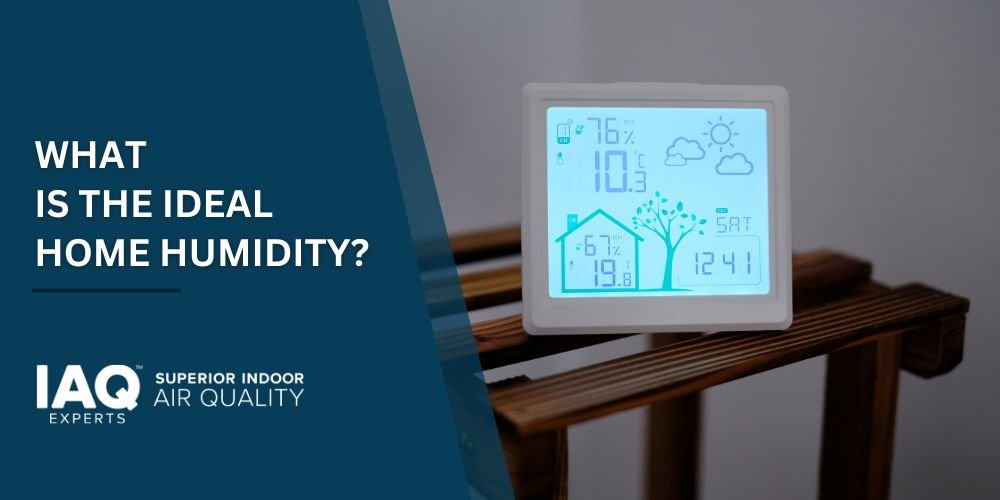
Using a hygrometer, a small device that measures humidity levels, can help homeowners monitor indoor air and maintain the ideal range throughout the year.
Conclusion
Keeping the humidity in your home balanced helps improve comfort, health, and indoor air quality. When moisture levels stay around 30% to 50%, the air feels more comfortable, and the risk of problems like mould, condensation, and dry air becomes much lower.
If your home feels too damp or too dry, professional help can make a big difference. IAQ Experts offers trusted indoor air quality services to help manage humidity and create a healthier indoor environment.